Back to the blog
3 Aug 2026

3 Aug 2026
Why the towel you dry with matters more on a coated or filmed car, and how to choose one that will not undo the work.
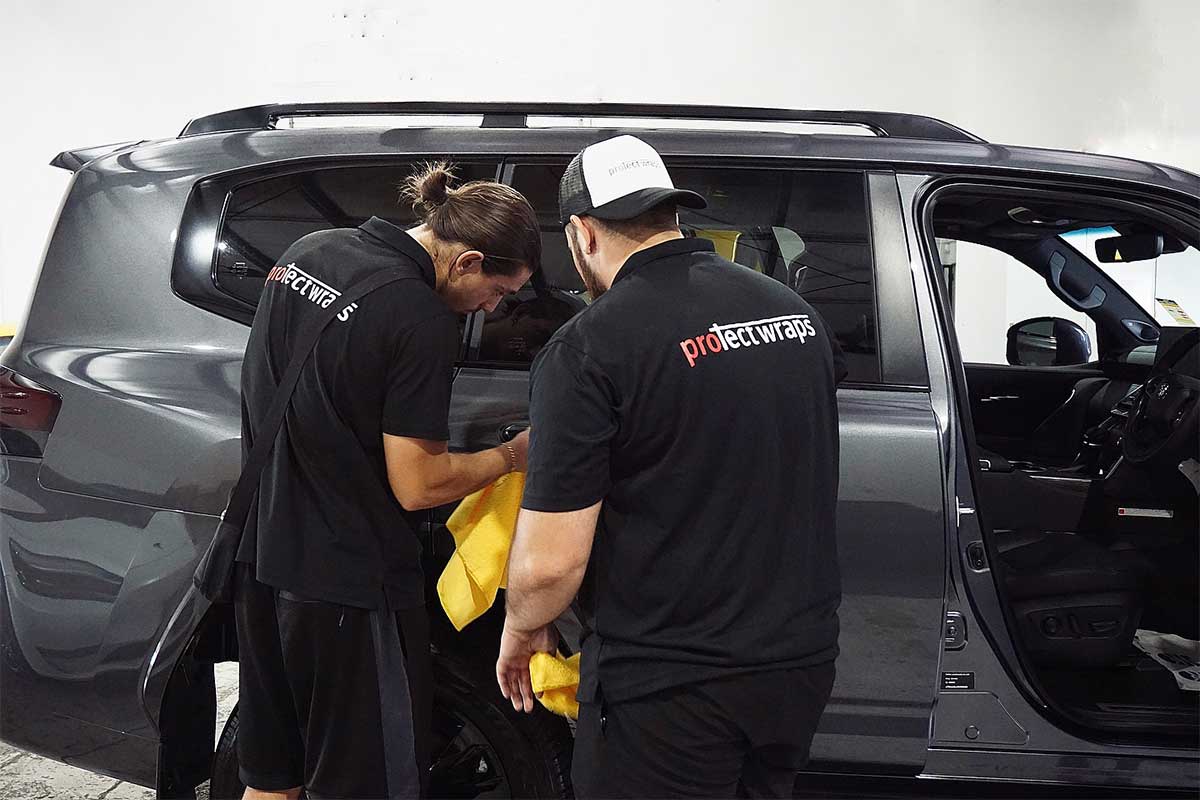
A car drying towel is the last thing to touch your paint at the end of every wash, and the most likely thing to mark it. That sounds dramatic until you consider that by the time you reach the drying stage the panel is clean, which means anything that goes wrong from here is entirely down to what you are holding.
This guide covers why the towel matters more once a car is protected, how microfibre and chamois genuinely differ, what to look for in three specific styles, and how to keep them working. If your car is protected with Paint Protection Film or a ceramic coating, the first section is the important one.
The short answer
Protected surfaces
People often assume that a protected car is a tougher car, so drying it matters less. The opposite is closer to the truth, because the finish you are now looking after is one you paid for, and the damage shows up differently.
Coatings show marring readily. The high gloss that makes a coated car look sharp is also what makes fine scratches obvious under direct light.
Film is softer than clear coat. Paint protection film self-heals light marks with warmth, but it is still more easily scuffed than the paint beneath it.
Less water means less lubrication. Protected surfaces shed water fast, so a towel can end up dragging on a nearly dry panel with nothing to cushion it.
Matte finishes cannot be polished. On a satin coating or a matte wrap, a mark that would buff out of gloss is simply permanent.
The practical implication is straightforward. On a protected car the towel should lift water off the surface rather than push it around, and it should do so with the weight of the towel alone. That points directly at deep-pile microfibre and away from anything that relies on contact pressure to work.
A coated car dries faster because water beads and sheets off. Take advantage of that by letting gravity do most of the work, then using the towel only for what is left rather than chasing every drop.
Head to head
Chamois was the standard for decades and still has loyal users, so the comparison is worth making properly rather than dismissing it. The two materials work in fundamentally different ways.
| Chamois | Microfibre | |
|---|---|---|
| How it dries | Squeegees water across the surface | Absorbs water into the fibres |
| Contact needed | Firm, direct pressure | Light, often just the towel's weight |
| Grit behaviour | Traps particles against the paint | Pile lifts particles away from the surface |
| Marring risk | Higher, especially on soft finishes | Lower with a quality deep-pile towel |
| Absorbency | Good, needs frequent wringing | Very high, holds many times its weight |
| Care | Must stay damp, can harden if dried out | Machine washable, no softener |
| Best use today | Glass, or older utility vehicles | Paint, film, coatings and wraps |
The verdict is not close for protected paint. Chamois removes water by pressing against the panel and pushing it along, which is precisely the motion that creates fine scratches when any contamination is present. Microfibre draws water up into a pile that also carries stray particles away from the surface.
Chamois still has a place on glass, where marring is not the concern it is on paint. For everything else a good microfibre towel is the safer tool.
What we recommend
Rather than pointing at one product that may be out of stock next month, here are the three styles worth owning and the specifications that separate a good one from a cheap one. Most owners end up with the first two.
Pick 1
Best all-rounder for coated and filmed cars
Long twisted fibres hold a large volume of water and glide with almost no pressure. This is the safest choice for a car you have paid to protect.
Pick 2
Best for glass, trim and final touches
The waffle structure creates surface area without deep pile, so it dries flat surfaces cleanly and leaves glass streak-free.
Pick 3
Best for door shuts, gaps and detail work
Smaller and more manageable for the fiddly areas a large towel cannot reach, and for chasing water that runs out of gaps after the main dry.
Edges, not the face. A towel with hard stitched borders will mark paint no matter how soft the middle is, because the edge is what catches when you change direction. Silk-banded or edgeless every time.
Interactive
Set the three below to match your car and how you wash it, and the tool will point you at one of the three styles above.
A guide to the right style, based on the trade-offs described above.
For body panels on a coated or filmed car, a large twisted loop towel lets you dry in long passes with almost no pressure, which is exactly what a protected finish wants.
Ask us about aftercareThis recommends a style of towel rather than a specific product, because construction and edge finish matter far more than the name on the label.
Keeping them safe
A well-cared-for towel stays safe for years. A neglected one becomes the thing scratching your car, and it happens gradually enough that most people never connect the two.
Wash microfibre on its own. Cotton sheds lint that lodges in the pile and never fully leaves. Keep a separate load and separate towels for paint, wheels and interior.
Skip fabric softener entirely. Softener coats the fibres and destroys absorbency permanently. Dryer sheets do the same thing, so leave those out too.
Use a gentle detergent, no bleach. A dedicated microfibre wash or a mild liquid detergent is enough. Bleach breaks down the fibres and shortens the towel's life sharply.
Wash warm, dry low or air dry. High heat melts the fine fibres that do the work, leaving a towel that feels stiff and stops absorbing.
Never reuse a dropped towel on paint. Grit embeds in the pile and will not shake out. Demote it to wheels or bin it, but do not risk it on a panel.
Store them clean and dry. Damp towels left in a bucket grow mildew and pick up odours, and a folded stack in a closed box stays cleaner than one hanging in a dusty garage.
Colour-code by job. One colour for paint, another for wheels, another for interior. It removes the chance of the worst mix-up entirely.
Retire them on feel. When a towel stops grabbing water, feels rough after washing, or has flattened pile, its useful life on paint is over.
None of this is difficult, and the payoff is real. A towel that has been looked after properly will outlast several cheap ones and, more importantly, will not be the reason your coating needs correcting in two years.
Related pages
Common questions
Protect what you are drying
Good technique keeps a finish looking sharp. Paint protection film and ceramic coating are what make it worth the effort in the first place. Talk to us about your car, with no obligation.
Get a Free Quote