Back to the blog
3 Aug 2026

3 Aug 2026
What actually sits behind a wrap quote, how size and coverage move the number, and how to tell a fair price from a false economy.
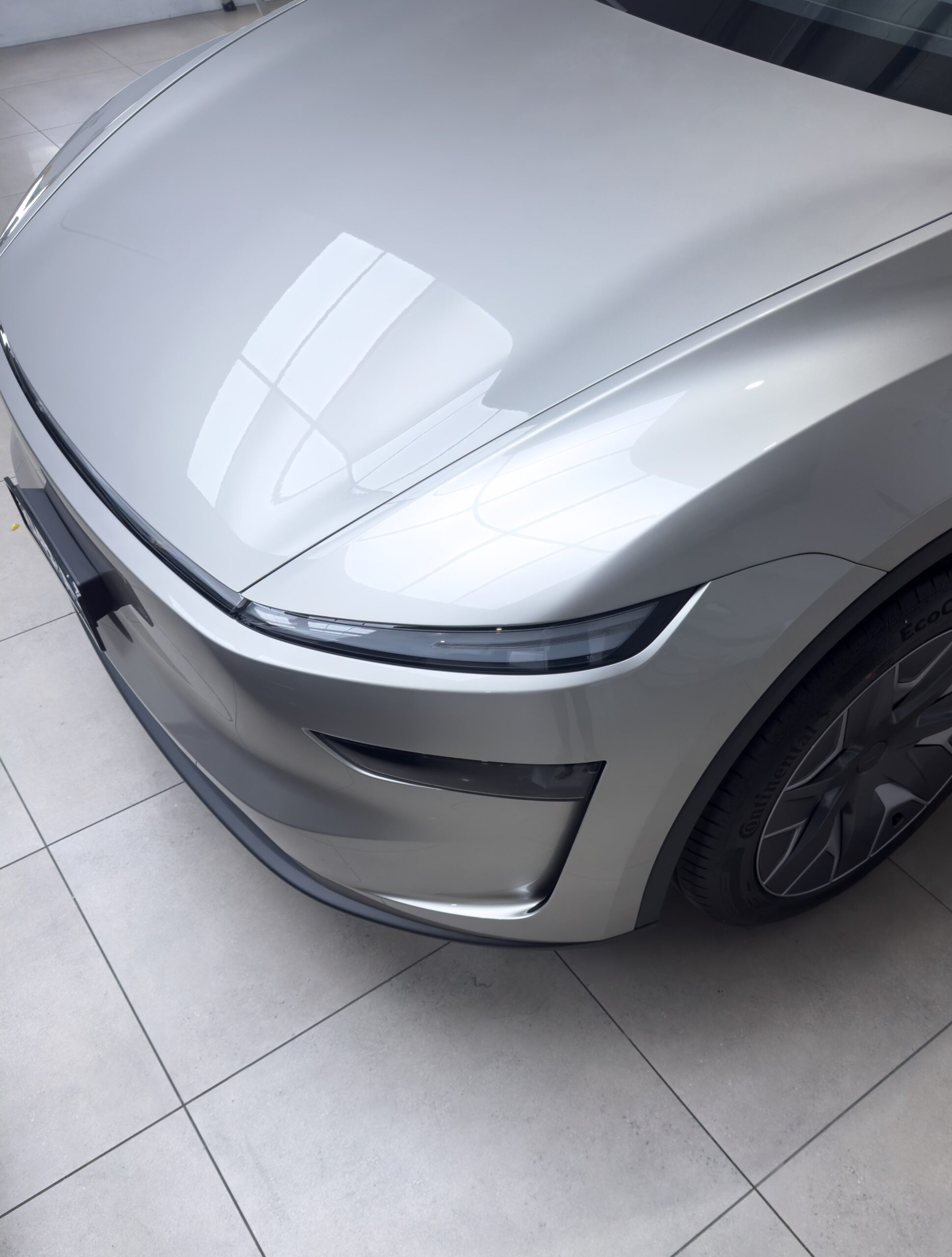
How much is a vehicle wrap? It is a common budgeting question, and the answer depends on the vehicle, coverage and film. This guide explains the main cost factors.
Wrapping is priced per vehicle rather than from a fixed menu. Two cars can receive very different quotes depending on their shape, coverage and finish. This guide breaks down those variables and includes a comparison tool further down. Ask a specialist vinyl installer for a quote on your own vehicle.
The short answer
What moves the number
Vinyl is sold by the metre, but a wrap is not priced by the metre alone. Most of the cost sits in the hours of skilled labour needed to make the film sit flat and stay put. These are the variables that move a quote up or down.
Size of the vehicle. More panel area means more vinyl and more hours. A small hatch is a fundamentally smaller job than a large SUV or a long-wheelbase van.
Complexity of the shape. Deep recesses, sharp creases, spoilers, vents and heavily sculpted bumpers all take longer to wrap cleanly than flat, simple panels.
How much you are wrapping. A bonnet and roof is a fraction of a full colour change. Coverage is usually the single biggest lever you control.
The finish you choose. Standard gloss and matte films sit at one end. Chrome and colour-shift vinyls cost more per metre and demand more care to apply.
Disassembly required. Removing handles, badges, lights and trim gives a tidier wrapped edge, but it adds labour at both the start and the end of the job.
Condition and existing vinyl. Old wrap has to come off first, and paint that is peeling or poorly repaired may not hold film safely. Both affect the quote.
Size and surface area
Size is the easiest variable to picture, because it maps directly to how much film goes on the car and how long the installer spends with it. When people ask how much is a vehicle wrap, this is usually the comparison they have in mind. Here is how the size bands compare to each other.
Within any one band, the spread is still wide. A heavily sculpted performance SUV can take longer than a plain van with big flat sides, even though the van uses more film. That is why the only figure worth budgeting against is one written for your specific make and model.
Size tells you how much vinyl goes on the car. Shape tells you how long it takes to get it there. A quote reflects both, which is why two cars of the same size can price differently.
Interactive
Choose your vehicle, the coverage you have in mind and the finish you like. The tool shows how that combination compares with the other options on this page, and what is driving the difference.
A comparison guide, not a price. Every wrap is quoted on the actual vehicle.
On a sedan or wagon, a full colour change in a standard gloss or matte finish usually sits near the middle of a relative wrap-cost scale.
This compares options only; it is not a price or price range. Vehicle shape, trim, paint condition and existing film can change the quote. Ask a specialist vinyl installer for a price on the actual vehicle.
Coverage
Coverage is where most people find room to move on price. You do not have to wrap the whole car to change how it looks, and a well-chosen partial wrap can deliver most of the visual impact for a fraction of the cost.
Selected panels only, such as the bonnet, roof, mirrors or trim. You pay for a portion of the film and a portion of the labour.
Every visible panel wrapped, every edge tucked, and far more disassembly. The car reads as a different colour entirely.
A gloss black roof and mirror set on a light-coloured car is a small job that noticeably changes the character of the vehicle. Two-tone work sits at the affordable end while still reading as a deliberate design choice rather than an add-on.
A partial wrap is also a low-risk way to try a finish you are unsure about. Living with a satin bonnet for a while tells you far more than a sample swatch does, and it can be removed or extended later.
Weighing the two comes down to what you actually want people to notice. If the answer is the colour of the car, you want a full wrap. A detail or a contrast, though, and a partial will get you there for less. Either way the factory paint is preserved underneath.
Where the money goes
Wrapping is one of those trades where the cheapest quote often turns out to be the most expensive one. When you ask how much is a vehicle wrap, the two things you are really paying for are the film itself and the hands that apply it.
01
Premium cast vinyl is engineered to stretch around curves and stay there. Cheaper calendered film wants to return to its original flat shape.
02
Poor film shows lifting edges, bubbling around recesses and uneven fade after a season in the Australian sun. Good film holds its colour and its grip.
03
Quality film comes off cleanly. Poor film can tear, leave adhesive behind or lift paint on its way off, which turns into a bill you did not plan for.
04
A full colour change is days of skilled work, not hours. Panels are wrapped one at a time with heat and tension controlled by hand.
| What you are paying for | Share of the job | Why it matters |
|---|---|---|
| Skilled labour | The majority | Panel by panel application, heat and tension controlled by hand |
| Disassembly and refit | Significant | Handles, badges, lights and trim removed for a tidier wrapped edge |
| The vinyl itself | Smaller than expected | Cast film costs more per metre but behaves far better on curves |
| Preparation | Small but essential | Decontamination so the film has a sound surface to bond to |
A quote that comes in dramatically below the others usually means one of three things: thinner film, less disassembly, or less time on the car. All three tend to surface within the first year as lifting corners and visible seams.
The return
That depends on what you want it to do, so it is worth separating the different cases.
For a private vehicle. Compared with a respray, a wrap is reversible. The factory paint stays where it is, protected from UV and light surface wear while the film is on, and a trained installer can remove the vinyl later to reveal the original colour.
For a leased or soon-to-be-sold car. Reversibility is the real value. You get the look you want now without permanently altering the car, and you hand it back or sell it on the factory colour.
For a business vehicle. A branded vehicle is advertising you pay for once. Every trip your team already makes becomes exposure, and unlike most advertising the cost does not recur each month.
Across a fleet. Consistency compounds the effect. A customer recognises the third van the way they recognised the first, which is difficult to buy through any other channel at the same price.
It is worth being clear about what a wrap is not. Vinyl is a styling product, not armour. If your priority is stopping stone chips and scratches, that is what Paint Protection Film is engineered for, and plenty of owners run film on the high-impact panels and a wrap over the rest.
Related pages
Common questions