Back to the blog
5 Sep 2026

5 Sep 2026
The painted ledge you step over every day, why it wears faster than any other panel, and how film compares with the plastic guards sold to cover it.
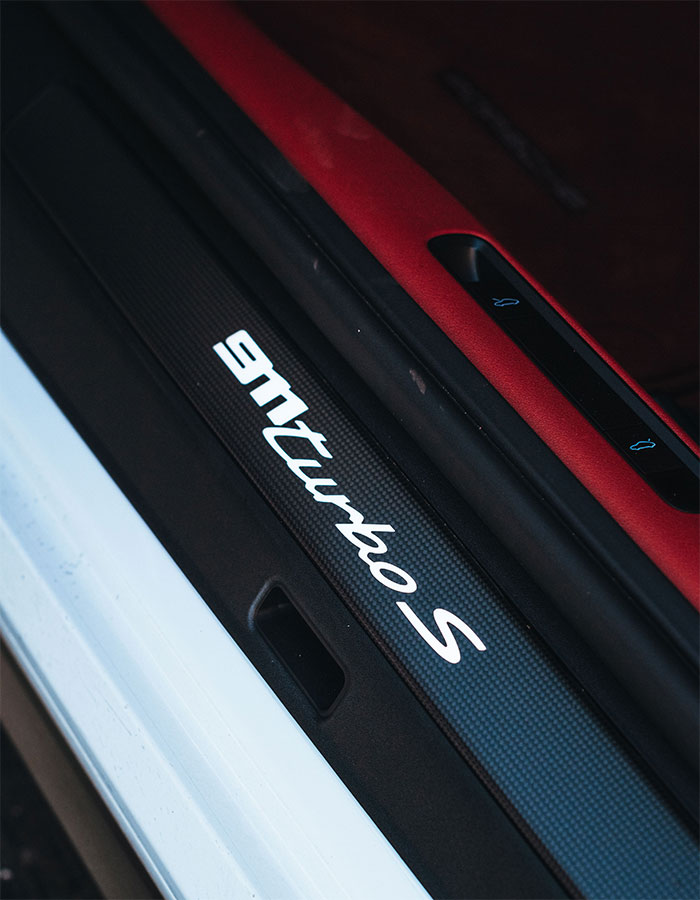
Almost every painted surface on a car is out of reach. The door sill is the exception. It is the one panel people physically stand on, and they do it with the dirtiest thing they own: the sole of a shoe.
This guide covers why that ledge wears so quickly, how paint protection film compares with the plastic guards sold to cover it, and what a professional install actually involves. For the wider service, see our Paint Protection Film page.
The short answer
The wear pattern
Damage to a car door sill builds so gradually that most owners never notice it happening. There is no single moment of impact, just a slow accumulation across hundreds of entries and exits until one day the ledge looks visibly worn.
The mechanics are simple. A shoe sole carries grit picked up from car parks, driveways and footpaths. Dragged across a painted ledge under body weight, that grit acts as an abrasive. It is the same principle as fine sandpaper, applied several times a day for years.
01
Every entry drags a sole across the ledge. Heels and work boots catch the outer edge hardest, which is why wear almost always starts there.
02
Loose material trapped in a tread turns each step into light sanding. The abrasive does the damage, not the rubber.
03
Toolboxes, shopping, laptop bags and sports kit all get slid across the sill rather than lifted over it.
04
Family cars take the worst of it. Climbing feet land squarely on the ledge, several times a day, for years on end.
05
Water carries grit into the sill area and holds it there, so the abrasive stays in contact rather than falling away.
06
Owners protect the front and ignore the back, then find the rear sills are worse because passengers are less careful.
The result is a band of fine scratching along the ledge, dulling the clear coat. On dark colours it catches the light every time the door opens. On light colours the exposed primer shows through as pale streaks.
Opening the door is one of the first things anyone does when inspecting a used car. A scuffed sill reads as a vehicle that has been used hard, whatever condition the rest of the paint is in.
The two options
Plastic sill protectors have been sold for decades. They are cheap, available for most models, and they do keep shoes off the paint. The problem is what they introduce in exchange.
| Plastic sill protector | Paint protection film | |
|---|---|---|
| How it attaches | Adhesive tape or clips over the sill | Bonded directly to the painted surface |
| Visible on the car | Yes, a fitted plastic strip | No, optically clear |
| Traps grit underneath | Yes, this is the main failure mode | No gap for grit to enter |
| Covers the full ledge | Rarely, and edges stay exposed | Yes, cut to the panel shape |
| Self-healing | No | Yes, light marks fade with warmth |
| Ages in sunlight | Hazes, yellows and cracks | UV inhibitors resist yellowing |
| Removal | Adhesive residue is common | Comes away cleanly when done properly |
Grit gets underneath. A plastic guard sits on the paint rather than bonding to it. Dust and sand work into the gap, then vibration grinds them against the clear coat. The damage happens where nobody can see it.
Adhesive lifts and lets water in. Tape softens in heat and lifts at the edges. Once water gets behind a guard it stays there, which is a corrosion risk on any chip already present.
It only covers part of the ledge. Guards are made to fit a range of models rather than yours exactly, so the edges of the sill often sit exposed on either side.
It changes how the car looks. A visible strip on a modern sill reads as an add-on, and a hazed one reads as a tired car.
Removal reveals the truth. Take a plastic guard off after a few years and you usually find dulled paint, adhesive residue, or a patch that has faded differently to the panel around it.
Film bonds to the panel, so there is no gap and nothing to trap. It follows the shape of your specific sill, covers the full ledge including the edges, and stays invisible. The self-healing top layer means light scuffing fades rather than accumulating.
It also comes off cleanly. Removed at the right time by a trained installer, the factory paint underneath is exactly as it was, which is the opposite of what plastic guards usually leave behind.
How we do it
Sill work is short, precise and done indoors. Most jobs are finished the same day, and many while you wait.
We check for existing scratches, chips and any previous repair or adhesive residue from an old guard. Film is clear, so anything already there stays visible underneath and is worth addressing first.
If plastic protectors have been fitted before, they come off and the adhesive is removed with products safe for automotive paint rather than solvents.
Sills collect road film, grit and shoe polish more than any other painted area. Each one is washed, decontaminated and dried so the film has a sound surface to bond to.
Light marring can be polished before film goes on. Correcting first is what stops existing damage being sealed under the film for its whole life.
Film cut to your sill shape is laid, worked into the contour and squeegeed out, with edges tucked into the panel gap so no line sits where a shoe will catch it.
Every sill is checked in good light, then we walk you through the short cure period and how to wash the car afterwards.
Coverage is worth thinking about at the same time. Most owners do all four sills rather than just the fronts, because rear passengers tend to be less careful than the driver. Many also add the rear loading lip, which takes the same abuse from bags and gear.
Film preserves the condition it finds. Fitted to an unmarked sill it keeps that sill unmarked. Fitted over existing scratching, it seals that scratching in, so earlier is genuinely better and cheaper.
Related pages
Common questions
Stop the wear before it starts
Tell us the vehicle and whether you want the front sills, all four, or the rear loading lip as well. We will come back with a tailored quote, with no obligation.
Get a Free Quote