Back to the blog
5 Sep 2026

5 Sep 2026
Waffle, plush and everything between. Which weave does which job, what GSM actually tells you, and the habits that stop a towel scratching your paint.
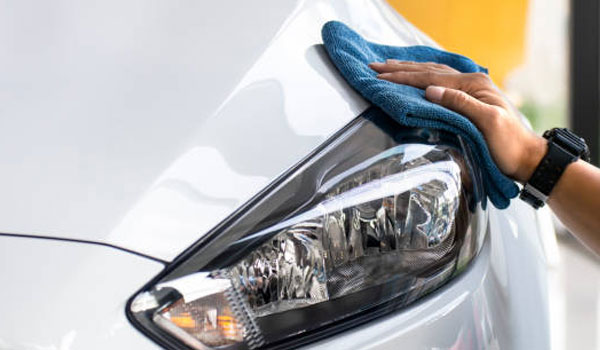
A microfibre cloth is the last thing to touch your paint at the end of every wash, and the most likely thing to mark it. By the time you reach the drying stage the panel is clean, so anything that goes wrong from that point is down to what you are holding.
This guide covers which weave suits which job, what GSM ratings really mean, and how to use and wash them so they stay safe. It matters more if your car is protected with Paint Protection Film or a ceramic coating, because those finishes show marring readily.
The short answer
Know your weave
A microfibre cloth is not one product. The fibres are the same, but how they are woven changes what the towel is good at, and using the wrong one is where most problems start.
01
A grid pattern that creates surface area without deep pile. Superb on glass, where it leaves no streaks, and useful for flat panels and trim.
02
Short, dense, soft fibres. The general purpose paint towel, used for buffing off products and light detailing work.
03
Long fibres twisted into loops that hold a large volume of water. This is the dedicated drying towel and the safest choice on paint.
04
Firmer and less absorbent, made for interiors, door shuts, engine bays and anywhere you need a bit of bite.
05
Very low pile, often with no visible weave. Dedicated to windows so it never picks up wax or coating residue from paint.
06
Small suede-like cloths used to lay down a coating evenly. Single purpose, and never used for anything else.
Colour-code by job. One colour for paint, another for wheels, another for interior and glass. A towel that has touched a wheel should never go near a panel again.
Decoding the numbers
GSM stands for grams per square metre. It measures the density of the fabric, which in practice tells you how much fibre is packed into the towel.
Higher GSM generally means more absorbency and a softer, plusher feel. It does not automatically mean better, because the right density depends entirely on the job.
| Rough GSM range | Typical use | Why it suits that job |
|---|---|---|
| Lower GSM | Glass, interiors, door shuts | Less pile means less streaking on glass and more bite for grimy areas |
| Mid GSM | General purpose paint work | Enough softness for paint with enough structure to buff products off cleanly |
| Higher GSM | Drying and final buffing | Deep pile holds a large volume of water and glides with almost no pressure |
Waffle weave towels work differently and are effective at lower weights, because the structure creates the surface area rather than the pile depth. Judging a waffle towel by GSM alone will mislead you.
Do not chase the highest number. A very high GSM towel is heavy, slow to dry and awkward on tight areas. For glass it is actively worse than a waffle at half the weight.
Look at the edges as well. Silk-banded or edgeless construction matters more than density. A hard stitched border will mark paint no matter how soft the face is.
Split ratio is the other number. Blends are usually quoted as something like 70/30 polyester to polyamide. More polyamide generally means softer and more absorbent.
Feel beats specification. Run a towel across the back of your hand. If it drags or catches on skin, it will drag on your clear coat too.
In practice
A microfibre cloth does three different jobs on a car, and each one has its own technique.
Microfibre wash mitts, not folded towels. Use two buckets, one with shampoo and one to rinse the mitt, so grit lifted off the car does not go straight back on. Rinse the mitt often and work top to bottom.
Reach for a twisted loop towel and let it do the work. Lay it flat on the panel and draw it slowly across, or simply pat if the car is coated. Do not scrub, and do not press. The weight of the towel is enough.
Plush pile, folded into quarters so you have eight clean faces. Flip to a fresh face as soon as one loads up, and use light pressure with straight passes rather than circles.
A dedicated waffle weave, and nothing that has touched paint. Two towels works best: one damp to clean, one dry to buff, which is what eliminates streaking.
Separate load, no cotton, no fabric softener, no bleach. Warm wash with a gentle detergent, then low heat or air dry. High heat melts the fine fibres that do the work.
Fold, do not bunch. A folded towel gives you multiple clean faces and keeps pressure even. A bunched towel concentrates pressure on whatever it has already picked up.
The whole point
Swirl marks are fine scratches in the clear coat, and the overwhelming majority are caused during washing and drying rather than by the road. That means they are almost entirely preventable.
Grit is the culprit, not the towel. Clean microfibre does not scratch paint. Microfibre carrying a particle of grit absolutely does, which is why a dropped towel is finished for paint work.
Reduce contact and pressure. Every pass is an opportunity to mark the surface. The right towel needs almost none, which is why a plush drying towel beats a thin one you have to press.
Never dry a dirty car. If the panel is not properly clean, drying it simply drags whatever is left across the paint. Rinse thoroughly before a towel goes anywhere near it.
Watch the edges. Hard stitched borders are the most common cause of marks. They catch when you change direction. Silk-banded or edgeless every time.
Retire towels on feel. When a towel stops grabbing water, feels rough after washing, or has flattened pile, its useful life on paint is over. Demote it to wheels.
Protected paint helps. A ceramic coating makes the surface slicker, so towels glide with less contact and less water sits on the panel to begin with.
None of this requires expensive equipment. A handful of good towels, kept separate by job and washed properly, will outlast a drawer full of cheap ones and do far less harm along the way.
Related pages
Common questions
Protect what you are drying
Good technique keeps a finish sharp. Paint protection film and ceramic coating are what make the effort worthwhile in the first place.
Get a Free Quote