
What is paint protection film? A plain-English explainer
If you have been asking what is paint protection film, this guide breaks it down in simple terms: a clear, self-healing layer that takes the hits so your factory paint never has to.
What is paint protection film, exactly?
Paint protection film, often shortened to PPF, is a clear, durable polyurethane film applied directly over your car's painted panels. Think of it as a tough, almost invisible skin that sits between your paint and the outside world. Stones, grit, bug splatter, tar and tree sap meet the film first, so the damage stays on a layer you can replace rather than on the clear coat you cannot.
Quality film is about 200 microns thick. That is roughly twice the thickness of a sheet of office paper, yet once it is professionally fitted you would struggle to tell it is there. The top surface is self-healing, the film is optically clear, and your original colour and gloss show through unchanged. You can also choose a satin finish if you want a matte, stealth look instead of factory gloss.
Because the film bonds to the paint rather than the metal, it can be professionally removed years later without lifting the factory finish underneath. That removability is a big reason leased, prestige and high-value cars are so often filmed.
How does paint protection film actually work?
The film is a sacrificial barrier and a self-repairing surface in one. Here is what is happening at each layer.
A sacrificial barrier
When a stone flies off the road, the film absorbs and spreads the impact across its surface. The energy that would have chipped your clear coat is taken by a layer that can be replaced panel by panel.
A self-healing top coat
The outer layer is elastomeric, which means light swirls and fine scratches reflow and disappear when warmed by the sun or a little hot water. The marks lift out rather than building up over time.
A hydrophobic surface
The smooth, slick finish sheds water, dirt and contaminants, so washing is quicker and grime is far less likely to bake on and stain in the Australian sun.
The self-healing trick, explained simply
Self-healing sounds like marketing, but the science is straightforward. The film's top layer is a flexible polymer with a kind of memory. Day-to-day driving leaves light scratches and swirl marks in that surface, the sort that dull a finish over time. Apply gentle heat and the polymer relaxes back to its original shape, and the mark simply vanishes.
In practice that means a quick blast of warm water, or even a hot summer's day in a Queensland car park, is enough to erase the small marks from washing, brushing past and everyday handling. Deeper gouges that cut right through the film will not heal, but the everyday haze that ages most cars does.
The result is a finish that keeps looking freshly detailed for far longer than bare paint ever could.
What does paint protection film protect against?
PPF was built for the real hazards your paint faces every time you leave the driveway.
Stone chips
Gravel, road debris and flying stones are the number one threat on highways and country roads. The film absorbs the impact before it reaches your paint.
Light scratches
Car park scuffs, wash swirls and brushing past with keys or bags leave fine marks. Most of these stay in the film and many self-heal with heat.
UV and fading
Harsh Australian sun oxidises and dulls unprotected paint. The film adds a UV-resistant layer that helps keep your colour true for longer.
Contaminants
Bird droppings, tree sap, bug splatter, tar and road grime can etch bare clear coat. The film resists staining and wipes clean far more easily.
How long does paint protection film last?
A quality film, professionally installed and looked after, typically lasts 5 to 10 years.
Lifespan is not a single number because it depends on how and where the car lives. A garaged weekend car that is washed gently will sit at the top of that range. A daily driver parked outdoors under full sun, racking up highway kilometres, will sit lower. The biggest factors are UV exposure, garaged versus outdoor parking, how often you drive at highway speed, and your washing habits and the products you use.
Installation quality matters just as much as the film itself. Cleanly wrapped and tucked edges resist lifting and peeling, which is where cheaper or rushed jobs tend to fail first. When the film does eventually reach the end of its life you may notice yellowing, lifting edges or fine cracking, all signs it is time to refresh it. For a deeper breakdown of the factors and the warning signs, read our guide on how long PPF lasts in Australian conditions.
Is paint protection film worth it?
For most owners, yes. The honest way to weigh it up is against the cost of doing nothing. A single deep stone chip can let in moisture and start corrosion. Years of UV slowly fade and oxidise the finish. Add up touch-ups, paint correction and the resale hit of tired-looking panels, and bare paint quietly costs you more than it seems.
PPF flips that. You pay once, up front, for years of protection on the panels that take the most punishment, and the original paint stays factory-fresh underneath. That protected finish is also a genuine selling point when it is time to move the car on.
PPF is particularly worth it if you own a new car you want to keep pristine, drive regular highway or gravel kilometres, own a prestige, performance or hard-to-repaint vehicle, or plan to keep your car for the long haul. Many owners also pair it with Ceramic Coating over the top for extra gloss and even easier washing.
How is paint protection film professionally applied?
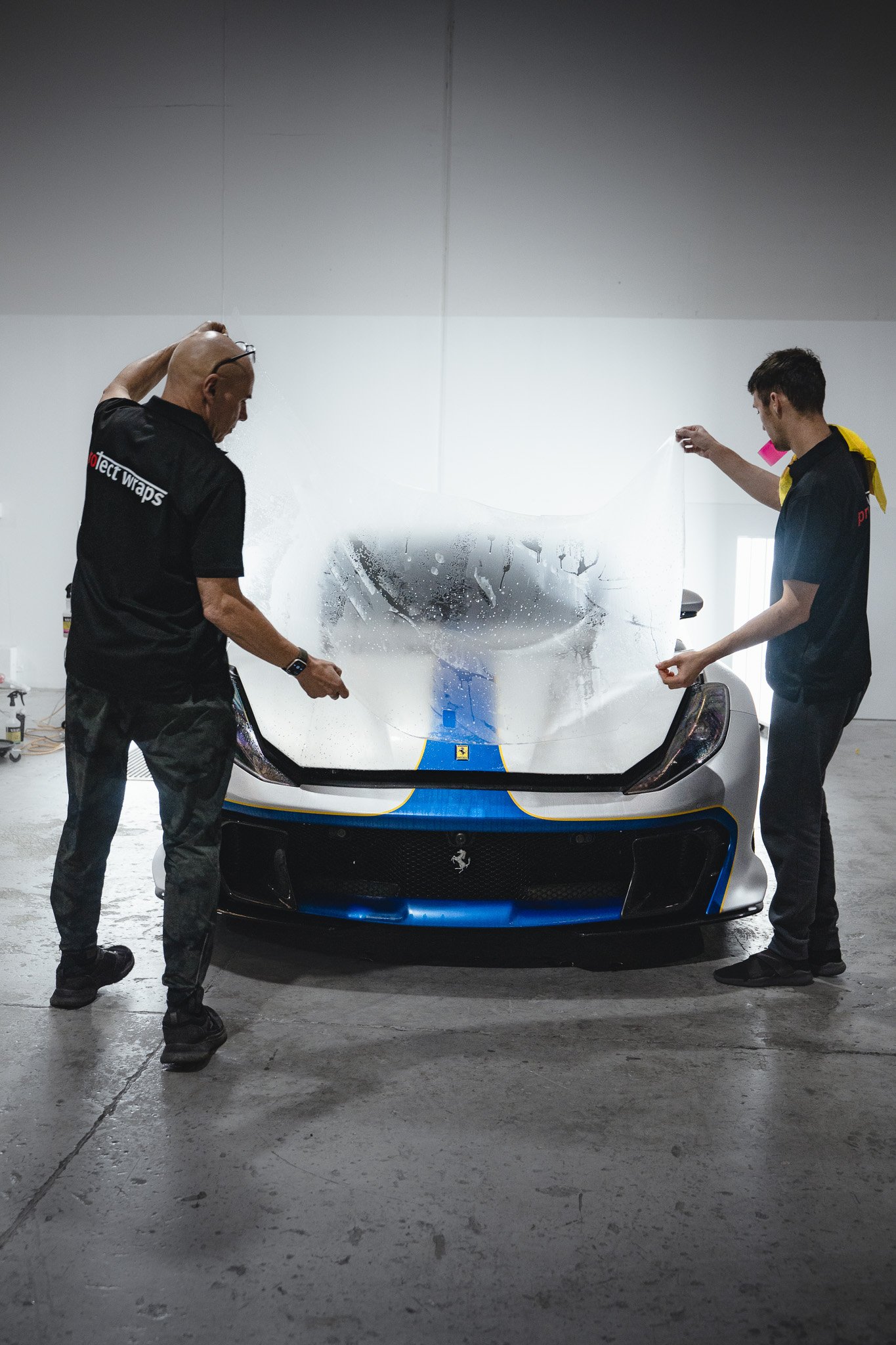
A proper install is a precise, indoor job done panel by panel, not a peel-and-stick afternoon.
Prep the paint
The car is decontaminated with a safe wash, iron removal and clay treatment, then any light defects are refined so nothing gets locked in under the film.
Cut the templates
Computer-generated, pre-cut templates are plotted for your exact make and model, so each panel's film is trimmed to fit with millimetre accuracy and minimal seams.
Apply panel by panel
Each panel section is positioned, then squeegeed to push out air and solution. Edges are wrapped and tucked where possible for a seamless, near-invisible result.
Cure and inspect
The car stays indoors while the film settles and bonds, then a final inspection and a walk-through of aftercare completes the job.
The pre-cut template approach is what separates a clean professional install from a patchy DIY kit. You can read about our full studio process on our Paint Protection Film service page, or compare independent technical detail on paint protection film at Wikipedia.
Paint protection film FAQs
The questions we hear most often from owners new to PPF.
Is paint protection film the same as a vinyl wrap?
No. A vinyl wrap is mainly about changing your car's colour or look. Paint protection film is a thicker, clear, self-healing layer engineered to absorb impacts and protect the paint underneath. They solve different problems, though a clear film keeps your original colour while a coloured wrap changes it.
Will the film yellow over time?
Quality modern film is engineered to resist yellowing and stays clear for years. Older or cheaper films could discolour, but reputable film is backed by a warranty that covers issues like yellowing, so this is far less of a concern today.
Can the film be removed without damaging my paint?
Yes. When installed correctly, the film can be professionally removed later without harming the factory paint beneath it. That is exactly why it suits leased, prestige and high-value vehicles.
Does paint protection film need special care?
Not really. You wash it like normal paint, ideally with gentle, paint-safe products and a clean microfibre. Avoid harsh chemicals and aggressive scrubbing, and rinse off grit before washing to keep the surface looking its best.
Should I get PPF or ceramic coating?
They do different jobs. PPF is a physical barrier that stops stone chips and scratches, while ceramic coating is a thin chemical layer that adds gloss and makes cleaning easier. Many owners use both. Our guide on PPF versus ceramic coating walks through which suits your car.
Can I just film the front of the car?
Yes. PPF coverage is flexible, from a partial front on panels that take the most stone chips through to full-vehicle protection. Highway commuters often start with the front, while prestige and collector owners may choose full coverage.
Ready to protect your paint?
Tell us how and where you drive, and our team will recommend the right film and coverage for your car. Studios in Brisbane, Gold Coast and Melbourne.